After Midnight: Why Night-Shift Kit Deserves Its Own Procurement Standard
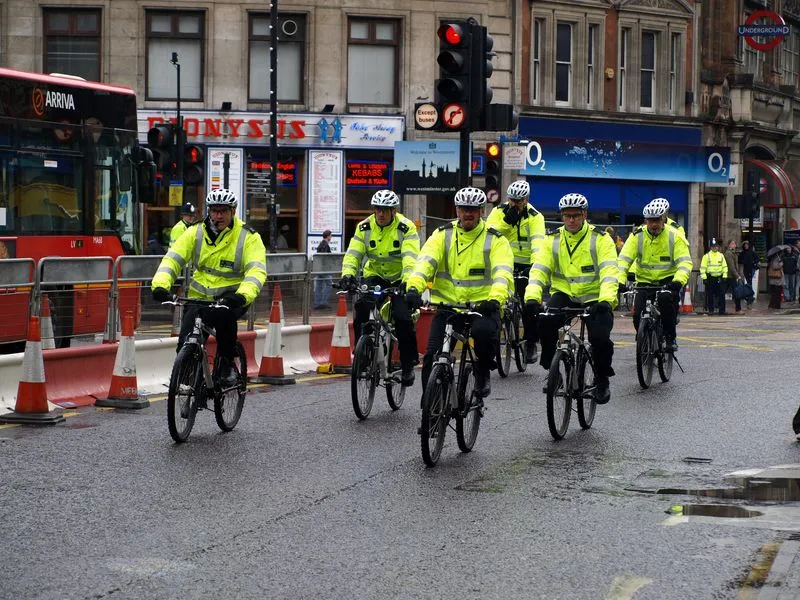
Photo: Paolo Redwings, CC BY 2.0, via Wikimedia Commons
The Hours That Break Kit
Anyone who has policed a town centre at 2am knows the pattern. The high street that seemed adequately lit at briefing is a patchwork of amber pools and deep shadow by the time the pubs shut. Doorway alcoves swallow figures. Car parks become search exercises. And it is precisely in these conditions that equipment chosen on a spreadsheet, in a warm office, at midday, starts to fall short.
Night duty is arguably the most demanding test any item of personal equipment faces. It combines reduced visibility, plummeting temperatures, wet conditions and the heightened tempo of the night economy. Yet most procurement decisions — whether made by forces or by individual officers topping up from their own pockets — are made with daytime assumptions baked in.
Torches: More Than Lumens
The specification sheets lean heavily on lumen counts, and it is easy to see why. A torch claiming 1,200 lumens looks decisive on paper. In practice, response officers who work regular nights tell a more nuanced story.
Raw output matters less than beam profile. A wide, diffused flood is what illuminates a garden hedge during a search; a tight throw is what picks out a face at the end of an alley. A torch that does only one of these well will frustrate its user within a fortnight. Equally, the modes matter. Fumbling through five brightness settings with numb fingers while a detainee waits in the back of a van is not a design triumph — it is a liability.
Strobe locks, momentary-on tail switches and the ability to operate the torch one-handed while holding a baton or radio are frequently cited by frontline staff as the features that actually earn their keep. Battery type is the other dividing line. Proprietary cells are cheaper upfront and a nuisance forever; CR123A and AA batteries can be sourced from any petrol station at 3am, which is exactly when they run out.
Hi-Vis Under Sodium Light
Here is a problem few buyers anticipate: hi-vis that performs beautifully on a rural road can almost vanish under orange sodium street lighting. The fluorescent yellow-green that pops against daylight grey can render uncomfortably close to the colour of sodium-lit tarmac and brickwork.
Retroreflective tape is the real workhorse after dark, and not all tape is equal. Class 2 garments meet the minimum for visibility, but officers working trunk roads or night-time traffic incidents should be looking at Class 3 — and at garments where the reflective bands are positioned to outline the human form rather than merely decorate the chest. A reflective band across the shoulders and around the arms reads as a person to a driver at distance; a single chest stripe reads as nothing at all.
Wear and laundering matter too. Reflective tape degrades with washing and abrasion, and a hi-vis vest on its third winter may be legally compliant and practically useless. Build replacement into the budget cycle, not the ad-hoc one.
Glove Dexterity in the Cold
Search gloves were covered in a recent trial on this site, but the night-shift dimension deserves its own attention. A glove that allows an officer to manipulate handcuffs at 4pm in October is not the same glove that allows cuffing at 1am in February.
The failure mode is familiar: thin gloves offer dexterity but no insulation, so fingers seize up during prolonged outdoor tasks; insulated gloves restore warmth but turn fine motor tasks into guesswork. Officers who work the night economy routinely solve this by carrying two pairs, which is a reasonable personal solution and an unreasonable procurement one. Suppliers who offer a genuinely dexterous insulated option — or thin gloves with windproof membranes — are addressing a real gap.
Clip Lights and the Small Failures
Shoulder-mounted clip lights and penlights are the unsung heroes of night duty: paperwork in the van, gate keys on a dark entry, checking a cell without waking the whole wing. They are also the items most likely to fail quietly. Corroded contacts, cracked clips and button batteries that die without warning are the standard complaints. Buy units with replaceable batteries and metal clips, and treat them as consumables.
A Buyer's Checklist for Night-Shift Ranges
When evaluating a supplier's night-duty offering, ask:
- Beam profile, not just lumens — does the torch do flood and throw?
- One-handed operation — can every function be worked with gloved hands?
- Battery availability — standard cells, obtainable at 3am, locally?
- Reflective performance under sodium lighting — ask for the tape specification, not just the class rating.
- Garment lifecycle — what does the reflective tape do after 25 washes?
- Cold-weather dexterity — is there an insulated glove that still allows cuff application?
- Spares and clips — can small lights be maintained, or only replaced?
Night shift is where the difference between adequate kit and good kit becomes visible — quite literally. Buyers who test in the conditions of use, rather than the conditions of purchase, will spend less over a decade and equip their people better. Suppliers who design for the small hours will find a loyal and underserved market waiting.