Fit for Duty: Why Unisex Kit Still Fails the Frontline
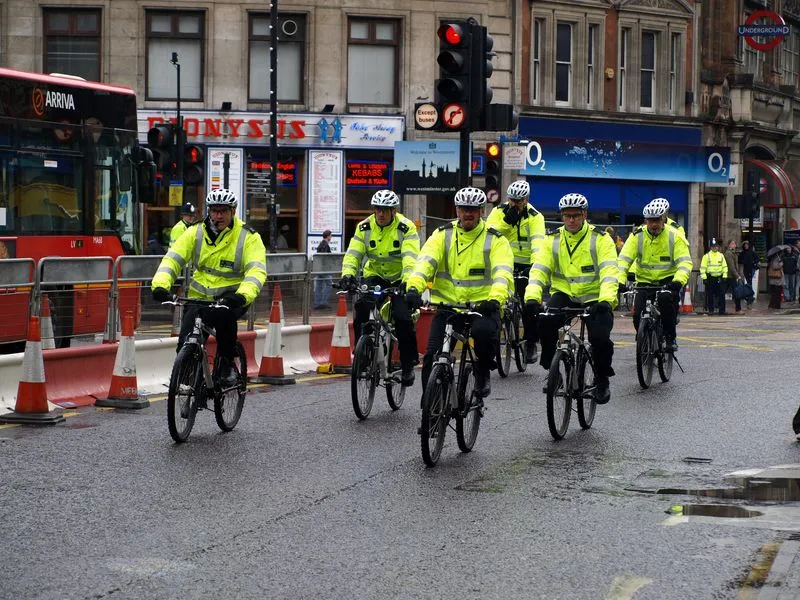
Photo: West Midlands Police from West Midlands, United Kingdom, CC BY-SA 2.0, via Wikimedia Commons
The label is not the fit
In police supply, the word unisex often does more work than it should. It suggests a garment or item of personal protective equipment has been designed to serve everyone, when in practice it may simply mean the manufacturer has avoided the difficult work of grading a product across different body shapes. For authorised buyers, the distinction matters. A duty belt that sits comfortably on a 34-inch waist may ride up, twist or press into the hip on a smaller frame. A body armour carrier that meets coverage requirements on a mannequin can sit high on a shorter torso, gap at the side or restrict reach when the wearer stretches across a vehicle seat.
The issue is not cosmetic. It affects movement, comfort, equipment access and, in some cases, safety. Yet it is often treated as a personal inconvenience rather than a specification problem. As forces and security organisations plan 2026 procurement, the sizing gap deserves to be treated as a measurable performance issue, not an afterthought in the fitting room.
Where poor fit becomes a cost
The first cost is movement. Body armour that is too long in the torso can catch on the belt line when an officer bends or kneels. Trousers with a poor rise may pull when sitting in a response vehicle or crouching at a scene. A hi-vis jacket cut for a broader shoulder may leave a smaller-framed wearer with sleeves that swallow the hands or a hem that interferes with belt-mounted equipment. These are not minor irritations over an eight-hour shift; they become fatigue, adjustment and distraction.
The second cost is equipment access. Duty belts are load-bearing systems, not simple straps. If the belt does not sit securely, pouches shift. A radio, baton, handcuffs or torch may end up in a different position than the one practised in training. Repeated adjustment breaks concentration and can slow a response when seconds matter. Poor fit also encourages unofficial workarounds: pouches moved, straps shortened, padding added, or items carried in pockets instead of on the belt.
The third cost is rejection. Kit that does not fit well is kit that gets left in the locker. That may appear to save the wearer discomfort in the short term, but it creates a procurement problem: money spent on items that are not worn as intended, and inconsistency in how teams are equipped. For female officers and smaller-framed male officers, the result can be a sense that standard issue is standard only for a particular body type.
There is also a safety dimension. Body armour must provide the coverage it was designed to provide. If a carrier is too long, too short or poorly adjusted, protection may be compromised or the wearer may alter it in ways that were never intended. Hi-vis clothing must remain visible and must not snag on kit. Trousers must allow safe movement without excessive fabric at the hem. None of these points are improved by labelling an item unisex and moving on.
Why the fitting room is not enough
Traditional sizing relies on tape measurements: chest, waist, inside leg and height. These are useful starting points, but they do not describe how a person moves under load. A static fitting in a warm room cannot show whether a vest rides up when its wearer climbs out of a vehicle, whether a belt digs in after two hours, or whether a jacket hem catches on a duty rig when the wearer runs.
A more reliable approach is to trial kit as a system, on a range of body shapes, across realistic tasks. That means not only asking whether an item fits, but whether it remains fit for purpose after movement, layering and load. Buyers should also recognise that female officers are not a niche group to be added at the end of a trial. They are part of the frontline workforce, and their kit needs should be represented in the sample, the test and the evaluation.
A sizing-trial checklist for 2026 procurement
A practical trial does not need to be elaborate, but it does need to be structured. The following checklist can be adapted for body armour, duty belts, trousers, hi-vis jackets and base layers.
- Test the full loadout, not isolated garments. A vest that feels acceptable on its own may behave differently with a belt, radio, baton and jacket.
- Recruit a representative range of body shapes, including female officers and smaller-framed male officers. Do not rely on a single sample size or a mannequin.
- Assess dynamic movement: reaching overhead, kneeling, climbing stairs, getting in and out of a vehicle, running a short distance and sitting for an extended period.
- Check interface points: belt-to-vest clearance, pouch placement, radio access, handcuff reach, jacket hem and sleeve length.
- Test across layers and seasons. A summer shirt and a winter base layer change the fit of the same carrier or jacket.
- Record rejection reasons in plain language. Note where the item rubbed, rode up, restricted reach or forced an adjustment.
- Separate comfort from safety. A garment can feel soft and still fail to provide stable coverage or secure equipment carriage.
- Compare adjustment range, not just minimum and maximum sizes. A wide range that is difficult to set correctly is less useful than a narrower range that holds its position.
- Include return-to-duty and pregnancy considerations where relevant, without assuming one solution covers every situation.
- Calculate cost per wear, not unit price alone. Kit that is rejected after trial is expensive regardless of its catalogue cost.
What good procurement looks like
Good procurement does not pretend that one pattern fits every officer. It specifies performance: adequate coverage, stable load carriage, freedom of movement, secure equipment access and consistent sizing across garments. It asks suppliers to demonstrate grading across a realistic size range and to provide fitting support, not just a size chart.
For buyers in 2026, the most useful question is not whether a product is labelled unisex. It is whether the product has been tested on the people who will wear it, during the work they will do. A sizing trial that reflects a real shift will expose more than a tape measure ever can. It will show where kit supports the officer and where it quietly gets in the way. That evidence is worth more than a label, and it is the basis for a fairer, safer and more cost-effective issue.