Certified or Counterfeit? Seven Checks Before You Buy Body Armour for Your Force

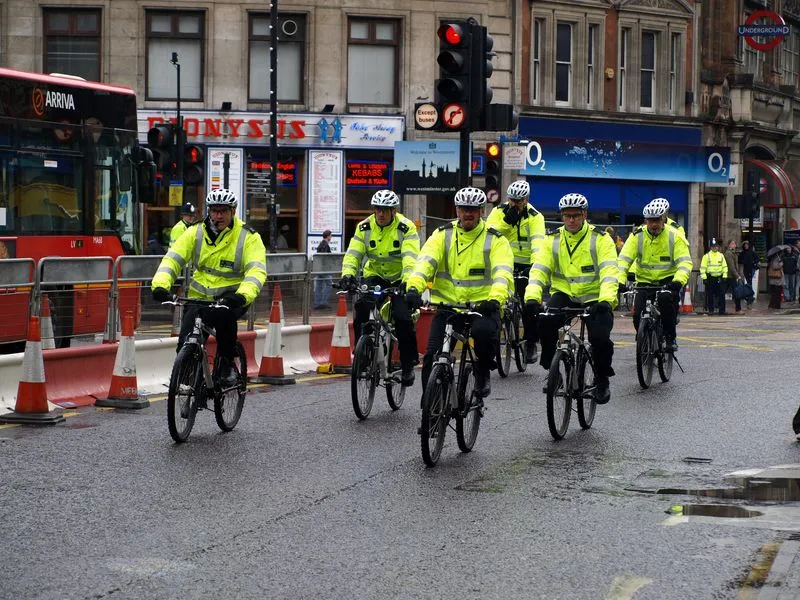
Photo: Abraham van Cuylenborch, PDM-owner, via Wikimedia Commons
Body armour is one of the few purchases where a failure can cost a life. Yet listings on major online marketplaces continue to offer so-called "stab proof" vests with no certification, no traceable manufacturer and no legal basis for sale into UK police or security roles. For authorised buyers, the challenge is not finding armour — it is filtering out everything that should never reach an operational officer.
Here are seven checks that separate professional-grade kit from the rest.
1. Verify the Certification Marking — and the Standard Behind It
Legitimate UK body armour is tested against standards set by the Home Office Centre for Applied Science and Technology (CAST), building on the earlier HOSDB framework. A compliant vest will state its protection level and test standard explicitly — for example, KR1, KR2 or SP1 under the current stab-resistant standard.
If a listing quotes "NIJ IIIA" only, or worse, uses vague terms like "military grade", treat it as a red flag. NIJ is the American standard; it is not the benchmark for UK police issue, and it says nothing about knife resistance.
2. Ask for the Test Certificate — Not Just the Logo
Any reputable manufacturer will supply a full test certificate from an accredited laboratory, identifying the exact model, size and protection level tested. Counterfeit sellers produce glossy marketing images; certified suppliers produce documents. If the certificate cannot be produced within a working day, walk away.
3. Check the Weight-to-Rating Ratio
Protection levels are meaningless if the vest is too heavy to wear for a ten-hour shift. Professional manufacturers publish realistic weights — typically in the range of 1.5 to 3 kilograms for a certified stab-resistant vest depending on coverage and level. Suspiciously light claims at high protection ratings, or weights the seller cannot confirm, indicate either misrepresentation or materials that have never been independently tested.
4. Examine the Warranty and Shelf Life
Armour degrades. Certified manufacturers specify a shelf life — commonly five years — and back their products with a meaningful warranty. A vest sold with a "lifetime guarantee" from an unknown brand, or with no stated expiry date, has not been through the testing regime that establishes degradation rates in the first place.
5. Confirm the Supplier's Authorised Buyer Process
Reputable UK suppliers of police-grade equipment verify that purchasers are legitimate — police forces, accredited security firms, or other authorised bodies. Sellers who will ship "tactical vests" to anyone with a credit card are not operating within the professional supply chain, and their products are accordingly outside any assurance framework.
6. Inspect the Construction Details
Certified armour uses specified materials — laminated aramid or UHMWPE packages for ballistic panels, engineered chainmail or laminate systems for spike protection — with documented coverage areas and consistent stitching. Photographs showing uneven seams, unbranded panels or missing batch numbers suggest a product assembled to look the part rather than to pass a test.
7. Demand Traceability
Every compliant vest carries a serial or batch number that links it to its test record and manufacture date. This matters for force armour management programmes, warranty claims and any post-incident investigation. If a product cannot be traced, it cannot be managed — and it cannot be trusted.
The Bottom Line for Buyers
The seven checks above take minutes to apply and eliminate the overwhelming majority of substandard imports. For procurement teams, the simplest safeguard remains sourcing through established UK suppliers who deal only in CAST/HOSDB-tested product and understand the authorised buyer framework.
If in doubt, ask the supplier one question: show me the certificate for this exact model and size. Professional manufacturers answer it immediately. Everyone else changes the subject.