Broken Zips and Beltless Radios: What Frontline Staff Wish Kit Suppliers Knew
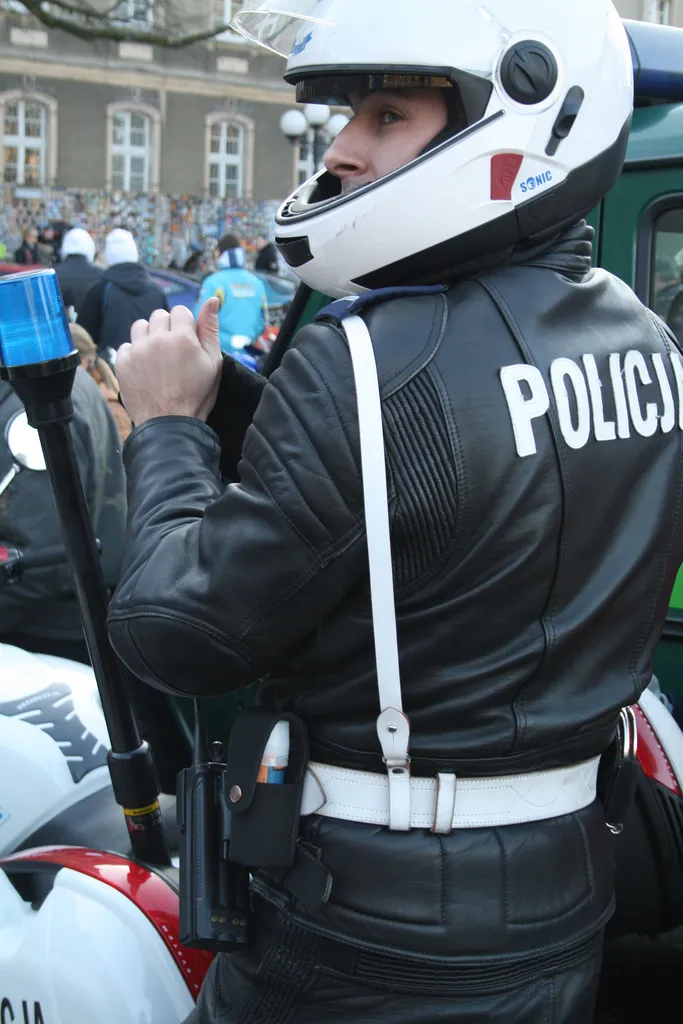
Photo: Piotr Włodarczyk from London, UK, CC BY-SA 2.0, via Wikimedia Commons
The Complaints That Never Change
Ask a room of response officers or door supervisors what's wrong with their issued kit, and the answers arrive before you've finished the question. Zip pulls that shear off when temperatures drop below freezing. Radios too bulky for the loop provided, so they migrate to a lanyard or a pocket, defeating the point. Body armour engineered for the standing silhouette and nothing else — so that every seated shift, every vehicle journey, every hour in a briefing room becomes a negotiation between protection and ribcage.
None of these are exotic problems. That is precisely the issue: they recur year after year because somewhere between the design desk and the purchase order, nobody asked the person wearing the kit for eight hours a day.
Where Design Meets Reality — and Fails
The pattern behind most gripes is the same. A product is tested in a warehouse, measured against a standard, photographed against a white backdrop, and shipped. What it never encounters is a November night in Hull: rain on the zip, gloves on the hands, a need to reach the radio within a second.
Consider the humble zip pull. On premium jackets it is a corded loop long enough to grip with gloves. On budget-issue kit it is a tab of stamped metal that becomes brittle in the cold and snaps at the worst moment. The difference costs pennies per unit. The difference in user experience is enormous. Multiply that across every fastening, strap and pouch in a loadout, and you have the gap between kit that serves and kit that endures.
A Buyer's Checklist for Field-Tested Kit
Procurement teams and authorised buyers can close this gap by demanding evidence rather than assurances. Five questions worth putting to any supplier:
- Who wore it, and for how long? Ask for trial data from serving officers or security staff, not just lab certifications.
- Does it work seated and gloved? Armour, belts and jacket zips should be demonstrated in a vehicle and with cold-weather gloves.
- Is the radio mounting system-agnostic? Forces run multiple handset models; a fixed loop for one model is a design failure.
- What fails first, and how is it repaired? A supplier who can name the first component to wear — and offer spares — has actually used their own product.
- Can we trial before the contract? Any supplier confident in their kit will welcome a pilot with a response team or door supervision firm.
From Grievance to Specification
The recurring complaints of frontline staff are, read properly, a free specification document. Zip pulls, radio carriage and seated comfort are not luxuries — they are the daily interface between an officer and their equipment. Buyers who treat these details as procurement criteria, and suppliers who treat them as design briefs, will both end up with kit that earns its place on the belt rather than a grudge in the locker room.
The catalogue will always promise. The beat, the custody suite and the hospital corridor will always tell the truth. Listen to the latter.