Silence Is a Specification: The Case Against the Noisy Kit Cabinet

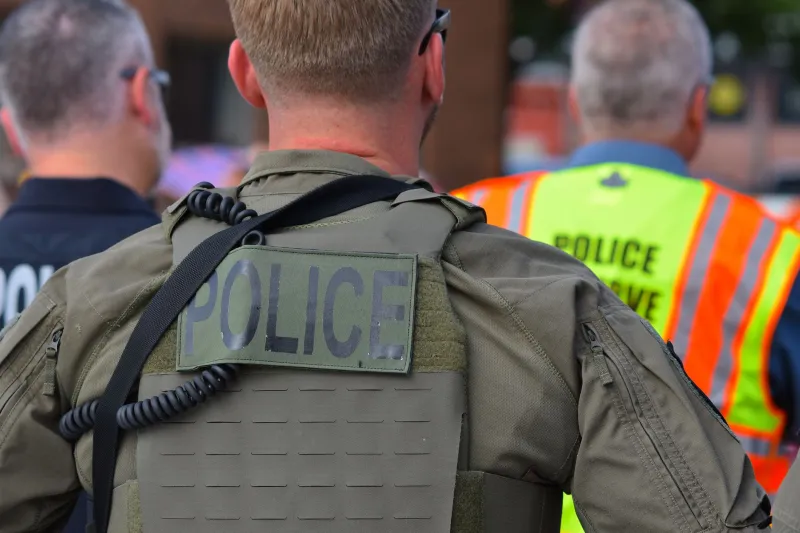
Photo by Photo by Nikola Gladovic on Unsplash on Unsplash
There is a particular sound every serving officer recognises: the rhythmic squeak of a budget patrol boot on a polished custody suite floor. It announces your arrival three doors before you reach them. It is not a safety issue in any formal sense, and it will never appear on an incident report. Yet it is one of the most persistent complaints about low-cost kit, and it tells us something uncomfortable about how we specify equipment.
The Sounds Budget Makes
Cheap kit fails acoustically before it fails structurally. The squeak comes from stiff, poorly finished leathers and synthetic linings rubbing where a better-constructed boot would flex smoothly. The rustle of a bargain-basement hi-vis comes from coated fabrics that have never been engineered for anything beyond passing a conformity assessment. The jangle of a poorly designed belt rig — keys, cuffs, a radio bracket that has never sat flush — is the soundtrack of an officer trying to approach a premises quietly and failing.
None of these are defects in the eyes of the supplier. The boot is waterproof. The jacket is conformant. The belt holds kit. Every line on the specification has been met. What has not been met is the officer's actual working requirement, which on foot patrol and surveillance-adjacent duties includes not being heard before you are seen.
Why Noise Discipline Matters
For response officers, noise is often an inconvenience. For anyone working alongside covert colleagues, or conducting a quiet check on a vulnerable person at 3am, it is a genuine operational problem. A rustling jacket can compromise an approach. A jangling rig can end a low-adrenaline encounter before it begins. Officers know this, which is why so many quietly modify their kit — taping buckles, replacing issued laces, stuffing keys into pockets to stop them ringing. We have written before about the unofficial modifications officers make when the approved list falls short. Noise is one of the chief reasons.
There is also a welfare dimension. Eight, ten, twelve hours in a garment that clicks, squeaks and rustles with every step is a low-level sensory burden. Officers report it as fatigue, as irritation, as a loss of confidence in their kit. They rarely report it as a procurement failure, but that is what it is.
A Quiet Argument for the Spec Sheet
The fix is unglamorous: write acoustic performance into the tender. Not a laboratory decibel reading — nobody is proposing an anechoic chamber at the contract stage — but a simple field criterion. Kit trials already exist in most forces in some form; add a listening element to them. Walk the trial boot along a corridor at night. Wear the trial jacket on a still evening and listen to it. Have the serving officer, not the buyer, give a verdict on whether the item announces itself.
Suppliers will adapt, because suppliers always adapt to what is specified. Manufacturers who invest in better linings, bonded seams and thoughtful hardware placement will win the work, and those who compete purely on unit price will have one less hiding place. The cost differential, in most cases, is marginal — the difference between a boot built to a price and a boot built to a purpose.
An Afterthought No Longer
Quietness will never headline a procurement document. It sits beneath waterproofing, certification and cut protection, and it always will. But there is a difference between a criterion that ranks low and one that is absent altogether. Right now, acoustic performance is absent — which is why officers are buying their own boots, taping their own buckles and improvising their own noise discipline at their own expense.
A specification that ignores how kit sounds is a specification that ignores how kit is used. The squeaky boot problem is not really about boots. It is about the gap between what documents measure and what officers endure. Closing that gap costs a paragraph in a tender document. The alternative costs the frontline, every shift, in small and maddening increments.