Velcro, Buckles and the Twenty-Second Rule: Why Donning Speed Decides Which Kit Gets Worn
The Scramble at Six O'Clock
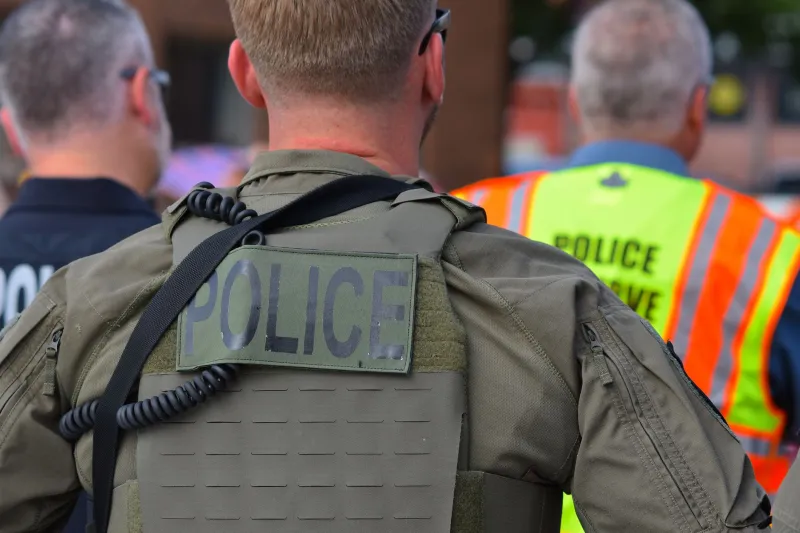
Stand at the back of any response team's parade room at the start of a night shift and watch what happens. The handover takes four minutes. The briefing takes six. And in the ninety seconds after the sergeant finishes speaking, a dozen officers transform from civilians in polos into kitted-up response staff — or, at least, most of them do.
It is in that scramble that the true design quality of UK police equipment reveals itself. Not in the catalogue. Not in the Home Office certification paperwork. In the race against the radio crackling with the first job of the evening.
What the Stopwatch Shows
We spent time with two forces observing shift-start routines, timing how long each item of kit took to don correctly. The results were consistent enough to be uncomfortable for some suppliers.
A side-loads stab vest with modern quick-release tabs: eighteen seconds, worn every shift without exception. An older over-the-head vest design with lacing at the flank: over a minute, and worn loosely at best, left in the vehicle at worst. Duty gloves with a single wide Velcro cuff: on before the officer had finished standing up. A competitor's glove with a fiddly pull-tab and narrow wrist aperture: frequently abandoned in favour of whatever was nearest.
The pattern held across hi-vis, torch holsters and even thermal layers. Kit that could be fitted correctly in under thirty seconds got worn — and worn properly. Kit that demanded patience got compromised, misfitted or left behind.
Compliance Is a Design Outcome
Procurement conversations tend to centre on protection levels, blade ratings, wash cycles and unit cost. All legitimate. But none of those specifications matter if the item spends the shift in a locker because a colleague called in an immediate and nobody had time for a three-buckle rigging routine.
This is not about officer laziness. It is about human factors. Under time pressure — and response policing is nothing but time pressure — people default to the fastest acceptable option. A vest that can be fitted in twenty seconds is not merely more convenient; it is more likely to be positioned correctly, closed fully and worn for the whole tour. A vest that fights the wearer gets a hurried, half-secured fitting that undermines the very protection it was certified to provide.
The Case for a Donning Specification
We would argue that suppliers and buyers alike should treat donning time as a stated specification, tested under realistic conditions: cold hands, poor lighting, standing in a car park, with the radio going.
Some manufacturers already understand this. Quick-release buckles, colour-coded closures, asymmetric designs that can be fitted one-handed — these are not gimmicks but responses to how kit is actually used. The best designs allow a vest to be donned and doffed rapidly without sacrificing fit, which matters for female officers, officers of differing builds, and anyone working through a British winter over multiple layers.
Buyers writing tenders can drive this too. Ask bidders for a timed donning demonstration. Include ease of fit in evaluation scoring. Trial periods — increasingly common across forces — should measure not just comfort and durability but how often the item is actually worn across a full roster of shifts.
Small Seconds, Large Consequences
The arithmetic is stark. An item donned in twenty seconds versus ninety seconds saves just over a minute per officer per shift. Across a force of thousands, that is meaningful time returned to the frontline. But the bigger prize is compliance: kit that is worn as intended protects as intended.
For the suppliers reading this — and Police Orders exists to serve them — the message is simple. The twenty-second rule is not a marketing flourish. It is a design brief. The next tender you bid on should be won partly on how fast your kit can be put on, in the dark, by someone who has already been on their feet for nine hours.
The scramble at six o'clock will happen tomorrow, as it does every day. The question is whether your equipment helps or hinders.