From Caithness to Cornwall: Why No Single Uniform Survives a British Year
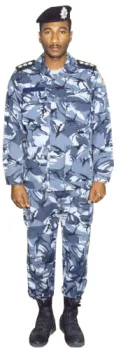
Photo: Lawrence of british arab, CC BY-SA 4.0, via Wikimedia Commons
Ask any officer who has stood on a Highland trunk road at 3am in January what they think of the national approach to uniform specification, and you will likely receive an answer unsuitable for publication. The same fleece that keeps a Met officer comfortable on a damp London evening is, in the far north of Scotland, a bad joke. Yet forces continue to buy clothing against broad national frameworks, driven by economies of scale and the administrative comfort of a single approved list.
The result is predictable: officers privately purchasing the kit that actually keeps them functional, and forces quietly tolerating it.
Two Countries, One Purchase Order
The United Kingdom packs remarkable climatic diversity into a modest landmass. Braemar regularly records the lowest temperatures in the country; coastal stations in Devon and Cornwall contend with horizontal rain and salt-laden wind; urban forces in the Midlands deal with something in between — cold, wet, grey, and persistent. A single garment specification cannot serve all of these environments well without becoming either over-engineered for the south or dangerously inadequate for the north.
The problem is compounded by procurement cycles. Uniform contracts are typically awarded on multi-year terms, judged against criteria that weight cost and compliance far above thermal performance in specific conditions. An outer shell that meets a waterproof standard on paper may still fail in practice if its breathability collapses under sustained exertion, or if the insulation beneath it was never specified with sub-zero deployment in mind.
The Layering Question
Any mountaineer could explain the solution in thirty seconds: build a system, not a garment. A base layer that wicks, a mid-layer that insulates, and a shell that protects against wind and precipitation — each element selected for the conditions the wearer will actually face.
Some forces have moved informally in this direction, issuing base layers as personal issue items or allowing officers to claim allowances for thermal undergarments. But the principle is rarely applied systematically. More commonly, officers are issued a mid-weight fleece and a shell and left to improvise, which means the officer wearing three supermarket base layers under their tac vest is not an edge case — they are the norm.
A sensible specification would define minimum performance standards per layer and permit variation by geographic posting. An officer in Dumfries does not need the same insulation level as one in Brighton, and pretending otherwise wastes budget in one place and endangers officers in the other.
What the Numbers Actually Mean
Waterproof ratings deserve particular scrutiny. A fabric rated at 5,000mm hydrostatic head will handle drizzle; sustained sleet driven by a coastal gale demands something closer to 10,000mm or better, with taped seams and storm flaps over zips. Breathability figures — often expressed as g/m²/24hr — matter just as much for officers who alternate between vehicle duty and foot pursuit. A shell that traps perspiration will leave the wearer wet from the inside regardless of what the weather does.
Buyers reviewing specifications should also look beyond the headline figures. Durable water repellent (DWR) coatings degrade with washing and abrasion; a garment that performs well in week one may shed water poorly by month six unless re-treated. Whether a supplier supports re-proofing guidance, and whether the garment's construction tolerates the wear patterns of body armour and duty belts, are questions worth asking before the contract is signed.
The Procurement Trap
Why, then, does the one-spec-fits-all model persist? Partly inertia, partly genuine constraints. National frameworks deliver pricing that individual forces could not negotiate alone. Equality legislation requires consistent provision. And any system allowing officer-level choice invites questions about standardisation, appearance, and auditability that procurement teams would rather avoid.
But the avoidance has a cost. Forces are effectively outsourcing climate decisions to individual officers, who resolve them with personal purchases of variable quality. That is neither equitable nor auditable — it is simply unmanaged.
A Practical Middle Path
Forces need not abandon central frameworks to fix this. A tiered specification — core issue items common to all, plus climate-dependent modules selected by region — preserves standardisation where it matters while acknowledging that Scotland's winter is not Kent's. Suppliers, for their part, should be ready to demonstrate performance data by condition rather than by garment, and to support mixed-tier orders without penalising smaller volumes.
Officers will always find ways to stay warm and dry. The question is whether their force will equip them properly or continue to let the weather decide.