Salt Spray, Sledgehammers and Fortnightly Verdicts: Inside a Force Kit Trial
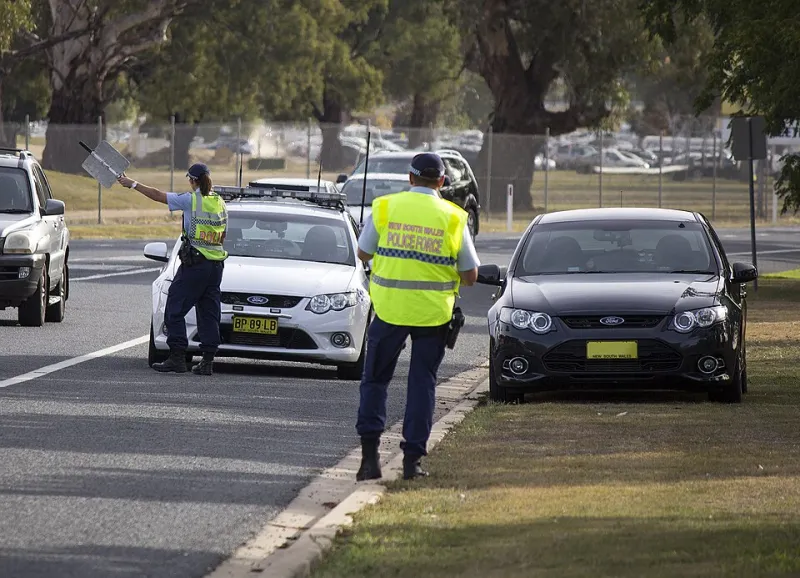
Photo: Bidgee, CC BY-SA 3.0 au, via Wikimedia Commons
Every item of kit carried by a UK response officer began life somewhere unglamorous: a trial. Long before a purchase order is raised, a handful of serving officers will have dropped it on concrete, soaked it in seawater or shoved it into a pouch the wrong way round. Procurement in British policing is slow, but it is rarely careless — and the trial is where the caution happens.
Why Forces Trial at All
The public sector spend rules that govern forces require evidence of value for money, but the practical driver is simpler: kit that fails on shift creates risk. A torch that dies in drizzle, a holster that softens after a wet week in an Armed Response Vehicle, a duty belt that chafes under body armour — none of these appear on a datasheet. Only field use exposes them.
Most forces therefore run informal but structured evaluations through a small group of officers, often coordinated by an equipment lead within the joint procurement unit or, in some forces, through the federation's equipment committee. The trials typically last between one and four weeks, with participants asked to log usage and note failures.
A Fortnight in the Life of a Trial
Consider a realistic cycle: a northern force is evaluating six search torches ahead of a rolling replacement programme.
Week one begins with a briefing. Each participating officer — usually a mix of response, neighbourhood and dog handlers — receives an identical unit, a condition report form and a deadline. The forms matter: forces increasingly ask for structured feedback (hours used, weather conditions, failure mode) rather than anecdote, because it feeds directly into the specification document.
The first few shifts are deceptively gentle. Officers use the torch as they normally would. Then the trial coordinator starts applying the scenarios the supplier dreads: a vehicle stop in horizontal rain on the M62, a search of a flooded culvert, a shift where the torch is clipped to a vest and bounced through a pursuit.
Week two is where products separate. The coordinator may deliberately omit charging cables to see which units hold charge across a rest day. Torches issued to coastal-adjacent response teams will show salt corrosion that inland testers never see. A unit that fails gets photographed, its serial number logged, and the failure written up — not to punish the supplier, but because the specification may need to change. Sometimes a product passes with a modification: a stronger pocket clip, a different switch guard, a revised battery.
The final report ranks products against weighted criteria — durability, ergonomics, compatibility with existing pouches, cost per unit over a five-year horizon. That report, not the supplier's brochure, becomes the reference point when the tender goes out.
Paper Passes, Streets Fail
The gap between laboratory performance and street performance is a recurring theme in force feedback. A torch rated IP68 may still fail if its rubber switch cover degrades after months of contact with baton spray or CS cartridge lubricant. A holster that passes a retention drop test in a controlled environment may become sluggish after a winter of de-icing salt spray in an armed vehicle's footwell.
This is why experienced trial coordinators design for the worst plausible shift, not the average one. Products that look excellent on paper but assume careful handling rarely survive contact with a Friday night in a city centre.
How Smaller Suppliers Get a Foot in the Door
For manufacturers — particularly small British firms hoping to compete with established brands — the trial is the best available entry point. A few practical routes:
- Engage early, not at tender stage. By the time a specification is published, the trial has already happened. Contact force equipment leads or regional procurement collaborations (such as blue light commercial hubs) six to twelve months ahead.
- Offer samples without conditions. Forces are wary of suppliers who demand feedback exclusivity or brand visibility. A no-strings sample, with clear technical data attached, is more likely to reach officers' hands.
- Design the trial for them. Provide condition-report templates, spare units and a named technical contact who can answer questions within a day. Trials stall when officers can't get answers.
- Accept failure gracefully. A product that fails a trial but generates a well-documented failure report is often invited back with a fix. Suppliers who argue the result are usually not invited back at all.
The Verdict
The two-week trial is unglamorous, occasionally brutal and rarely written about — but it is the quiet filter that determines what British officers actually carry. For buyers, it is the reason the specification list looks the way it does. For suppliers, it is the single most important hurdle between a good product and a shelf in the stores.
Forces that invest in well-designed trials spend less on replacements and see fewer kit-related complaints. Suppliers that respect the process — even when it hurts — tend to find the door opens again. In UK policing, that is often worth more than any marketing budget.